


Guide to Off-Ice Training for Ice Skaters
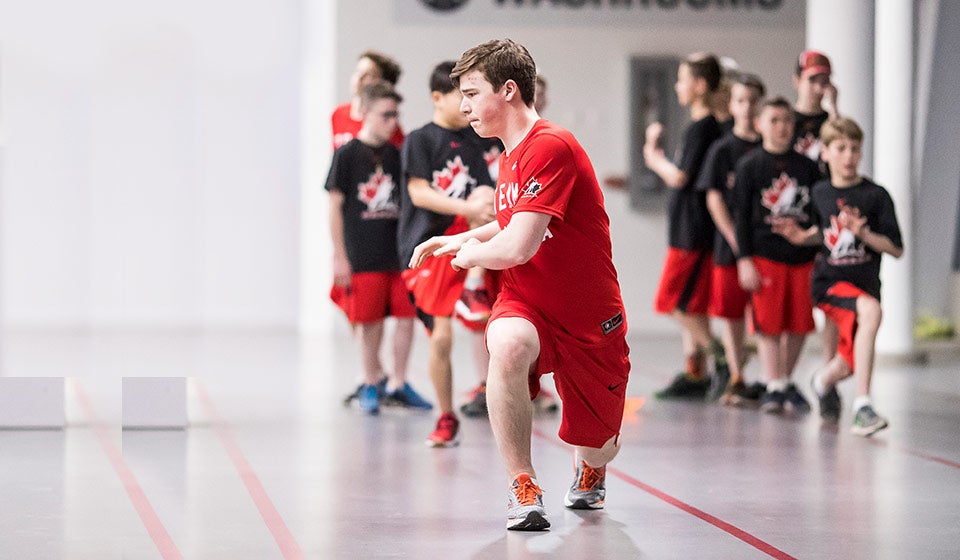
Ice time will always be at the heart of skating, but true mastery is not built on the rink alone. Behind every powerful jump and centered spin is a foundation of strength, balance, flexibility, and mental focus developed away from the ice.
A well-designed ice skaters’ workout goes beyond isolated ice sessions. It intentionally blends on-ice practice and off-ice strength and recovery to create a more complete training experience. For skaters at every level, this type of workout builds the physical and mental qualities that make on-ice skills stronger and more consistent. Ultimately, it helps skaters progress with purpose while supporting long-term development both on and off the ice.
This guide walks through why off-ice training matters and how it directly supports skating performance.
Why Do Ice Skaters Need Off-Ice Training: Figure Skating 101
Skating is a demanding sport that combines power, precision, artistry, and endurance. While ice sessions refine technique, they don’t always provide enough stimulus to fully develop the muscles and movement patterns that protect the body and enhance performance.
Off-ice training fills those gaps by:
- Strengthening the muscles responsible for explosive takeoffs and controlled landings
- Improving balance in single-leg positions
- Building endurance for full routines
It also gives skaters the chance to focus on movement quality and alignment in a controlled environment, reducing unnecessary strain and supporting longevity in the sport.
Understanding the role of off-ice work helps explain why many elite programs prioritize it alongside ice time: Strong fundamentals off the ice lead to better outcomes on it.
Strength and Plyometrics
Strength and plyometric training are the core of effective off-ice preparation for skaters. Together, these elements build the power and coordination needed for explosive movements and controlled landings.
How Does Strength Training Help Jumps and Spins?
Strength training allows skaters to develop the force required for strong takeoffs and faster, more controlled rotations in the air. Through strength training and muscle building, skaters learn to generate power while maintaining proper alignment through the lower body and core.
Foundational movements are commonly used because they train the body to produce and absorb force efficiently. These include exercises such as:
- < Squats
- Lunges
- Push-ups
- Deadlifts
Single-leg variations of these moves are especially valuable for skaters, as nearly every on-ice skill relies on unilateral strength and stability. When performed with proper technique and thoughtful progression, strength training helps skaters move more powerfully while maintaining alignment through the hips, knees, and ankles. Over time, this translates to improved control on the ice.
Plyometrics for Explosive Power
Plyometric training focuses on speed and explosiveness, both of which are critical for skating performance. Plyometrics help deliver quicker takeoffs and greater jump height by training the body to generate force rapidly.
Several exercises mimic the explosive nature of skating jumps, such as:
- Jump squats
- Hops
- Bounding drills
Just as important as the jump itself is the landing, where controlled, balanced mechanics reinforce body awareness and proper alignment.
Plyometrics should always be introduced gradually, with an emphasis on quality over quantity. This approach is especially important for developing athletes, helping them build power while reinforcing safe movement patterns that carry over to on-ice performance.
Core and Balance
Core strength and balance are essential components of off-ice training for skaters, supporting nearly every movement on the ice. Because skating is dominated by single-leg positions, stability through the torso and hips is non-negotiable.
What Balance Training Helps Skaters Improve Faster?
Balance training helps skaters improve alignment and spin control more efficiently while also supporting their overall stability. A strong, responsive core allows the upper and lower body to work together during jumps and transitions.
Off-ice balance training includes exercises such as:
- Planks
- Rotational core work
- Single-leg stability drills
These movements challenge coordination and control, helping skaters maintain clean positions and centered spins. After all, improved balance off the ice leads to better body awareness on it. Skaters who can manage their center of gravity may be more confident entering jumps and sustaining demanding positions throughout a full program.
Flexibility
Flexibility plays an important supporting role in skating performance, helping athletes move with greater ease and expression on the ice. While it doesn’t replace strength or power, flexibility work allows skaters to access positions more comfortably and maintain quality movement throughout training and competition.
How Does Flexibility Support Lines and Range of Motion?
Flexibility and mobility work to support the range of motion required for skating’s long lines and expressive movements.
Dynamic stretching before training prepares the body for movement, while targeted mobility and stretching sessions help maintain joint health and muscle length over time. This can improve the appearance of extensions and reduce unnecessary tension during skating.
Flexibility work also encourages greater body awareness, helping skaters understand how their joints and muscles move together. This awareness supports both technical execution and artistic expression on the ice.
Endurance
Endurance training ensures skaters can maintain quality movement and focus from start to finish. Even the most technically skilled skater may struggle if fatigue sets in during the program.
How Do Skaters Build Endurance for Full Routines?
Skaters build endurance through off-ice conditioning that supports sustained effort under fatigue. This type of training helps maintain posture and control through long programs.
Off-ice endurance work may include interval-based conditioning, circuit training, or steady cardiovascular sessions, depending on the skater’s age and training phase. The objective is not just to last longer, but to preserve movement quality as fatigue increases.
Improved endurance supports cleaner elements late in programs and helps skaters feel more confident during competition and high-pressure situations.
Mental Preparation
Mental preparation is a critical yet often overlooked aspect of skating performance. Truly comprehensive off-ice training will provide structured opportunities for skaters to develop focus, confidence, and performance readiness through various techniques.
- Visualization allows skaters to mentally rehearse programs and elements, reinforcing familiarity and enhancing composure.
- Goal-setting provides motivation and direction.
- Mindfulness practices like meditation, journaling, and deep breathing help manage stress and support concentration during training and competition.
When mental preparation is integrated into physical training, skaters are better equipped to navigate setbacks and manage their nerves.
How Off-Ice Training Supports an Ice Skater’s Workout Routine
A complete ice skater's workout blends structured ice sessions with intentional off-ice conditioning. Off-ice training enhances ice time by supporting the development of key physical qualities, like core strength, balance, and flexibility, as well as mental readiness.
This integrated approach allows skaters to jump, spin, and take on the ice more powerfully and more confidently.
Bringing On and Off Ice Training Together at The St. James
At The St. James, off-ice training is designed to complement elite skating instruction within a single, comprehensive environment. Athletes have access to advanced strength and conditioning spaces through the Performance House and the gym, supporting everything from foundational strength to high-intensity conditioning.
These resources pair seamlessly with structured on-ice development through Ice Skating Programs and STJ Academy coaching pathways, ensuring that off-ice gains translate directly to on-ice performance. Whether you're looking for ice skating near DC or long-term skill development, The St. James offers programs designed to help skaters progress on and off the ice.
Recovery is also treated as an essential part of training, with the Recovery Suite offering options such as cryotherapy and infrared saunas to support readiness and overall wellness. For skaters seeking individualized support, sport-specific guidance is also available through Personal Training and Youth Strength & Conditioning services.
Ultimately, our goal is to help athletes train with purpose and confidence at every stage of development. Discover what you’re capable of achieving in the sport you love with The St. James.
Sources:
Healthline. The Benefits of Dynamic Stretching and How to Get Started. https://www.healthline.com/health/exercise-fitness/dynamic-stretching
National Library of Medicine. Does functional strength training program improve ice speed and agility in young elite ice hockey players? Functional strength training’s impact on hockey performance.https://pmc.ncbi.nlm.nih.gov/articles/PMC11936901/
Riedell. Ice Skating Posture: Everything You Need to Know. https://ice-blog.riedellskates.com/ice-skating-posture-everything-you-need-to-know/