


Why Kids Should Play Sports: Benefits of Sports for Kids
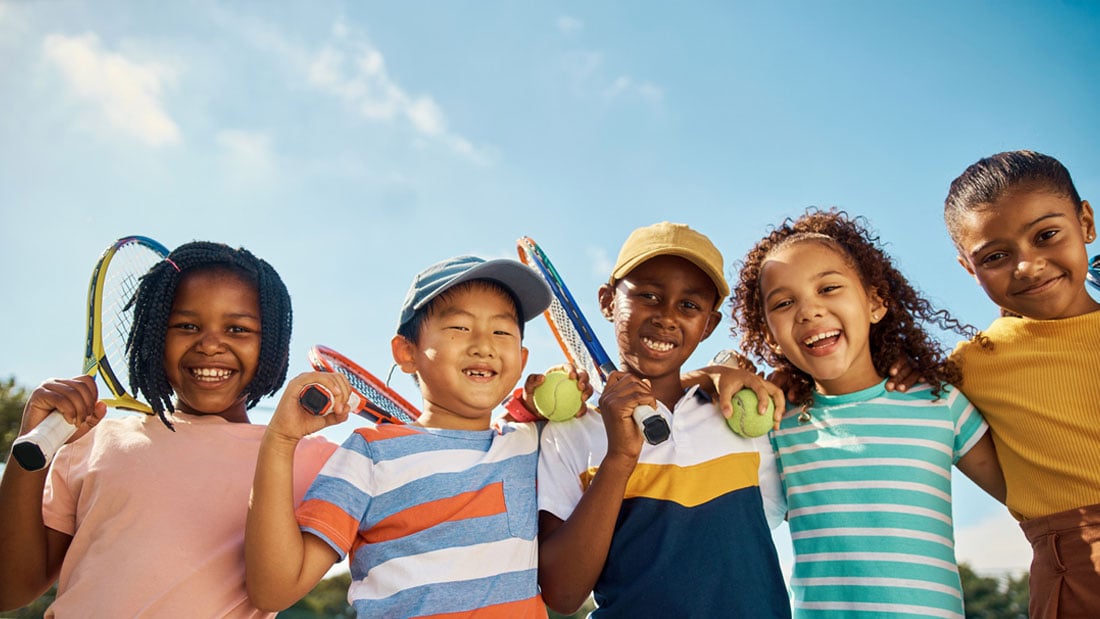
Youth sports are about much more than competition. Whether it's soccer, basketball, T-ball, gymnastics, or swimming, physical activity in a group setting helps children stay healthy in more ways than one.
Why are sports good for kids, exactly? From the physical effects of exercise to the emotional and developmental benefits of team participation, learning to show up for others, and trying new things, there are many good things about kids playing sports.
Keep reading for more insight into why kids should play sports, including how structured activity supports social development, builds confidence, encourages emotional regulation, and promotes long-term healthy habits.
What Are the Biggest Benefits of Playing Sports for Kids?
Sports can play a meaningful role in a child's development. Everyone is different, but overall, playing on a team can be a positive experience for kids in elementary school (or younger) through high school.
The benefits of sports for kids go beyond exercise and competition. Can sports help build confidence and social skills? You bet. Let's explore the many ways a child can benefit from joining a sports team.
1) Physical Benefits
Playing sports is a fun way to get exercise—and it's no secret that physical activity is important for kids of all ages. It can support strength and endurance at a crucial time when kids are growing and developing, along with basic motor skills like hand-eye coordination, balance, and grip.
Research shows that participating in sports as a child—especially when it's an enjoyable, positive experience—might also make a person more likely to stay physically active as an adult.
2) Mental and Emotional Benefits
Getting regular physical activity through after-school sports seems to have a positive effect on brain function, mental health, and how well children do in school. Some research shows that kids who play team sports may have better executive functioning—including the ability to focus, set goals, and complete tasks like homework.
When sports are a positive experience that feels fun, supportive, and motivating but not too competitive, kids can build self-esteem and mental toughness that can help them get through stressful times.
3) Social Development
Regular exercise is, overall, a good thing for kids. But participating in team sports might be even more beneficial than individual sports. Research shows that being part of a team helps children:
- Develop relationships with their peers
- Improve their social skills, including how they communicate with others
- Learn the value of showing up for others and doing their part
- Think more about how their actions affect other people
- Adapt in social situations
Getting along with people, cooperating with peers, and feeling comfortable in social situations matter throughout every life stage. Playing sports is one way kids can develop in these critical areas during adolescence.
4) Exploring New Interests
Playing sports also allows children to explore new interests. Trying new things helps them figure out what they like, what they're good at, and what gets them excited or motivated.
Remember, it's totally okay for kids to try one season of several different sports. They might decide they don't like most of them but find one or two activities they love—and feel confident in their sport of choice.
Considerations for Parents
Of course, every child's interest in sports and experience with them is different. Here's what parents can consider to help make sports a positive experience while keeping in mind their child's unique needs.
Choosing Age-Appropriate Participation
Participating in sports should be age-appropriate.
For instance, some kids start playing soccer or basketball as young as kindergarten. But for younger age groups especially, sports should be a low-pressure experience. This often means a short season, practice just once a week, and possibly not keeping score.
Balancing Sports With Other Activities
Parents should also think about how their kids are balancing sports with other activities and commitments. School, homework, family time, sleep, time with friends, and unstructured play are all equally important.
Sometimes, when sports take up substantial time and attention, it can make them less fun or lead to burnout.
Emphasizing Fun Over Pressure
Team sports are competitive. And although competition can be fun and motivating, too much pressure to win or perform can make sports less enjoyable.
Parents, coaches, and other adults might push kids to succeed in sports. While some children may go on to play in college or professionally, this isn't a reality for the vast majority of people who play sports from a young age.
The point is, team sports can be valuable for kids no matter their skill level. Even lighthearted, recreational participation offers meaningful benefits.
At What Age Should Kids Start Playing Sports?
The ideal age is different for every child. Some kids start playing sports around age 4 or 5. Others might try soccer, T-ball, gymnastics, or basketball in elementary school.
Schools typically offer team sports to middle and high school students, but families can also consider a youth sports league for younger kids.
Choosing the Right Sports Environment for Your Child
Many parents want to support their child's physical health, social development, and confidence. Playing sports can help, but there's no one-size-fits-all approach.
When choosing a sport, consider your child's age, interest level, and the time commitment required.
The goal is to find something fun in a supportive environment so kids can enjoy the benefits of sports without unnecessary pressure.
Youth Sports and Beginner Programs at The St. James
Playing sports can be part of a holistic approach to youth development. The St. James offers a variety of youth leagues and beginner sports programs.
With support and encouragement in a safe, family-oriented environment, kids of all ages can explore sports, stay active, and build confidence.
Sources:
Open Access Journal of Sports Medicine. Youth sport: positive and negative impact on young athletes. https://pmc.ncbi.nlm.nih.gov/articles/PMC3871410/
Annals of Human Biology. Growth, maturity status, motor proficiency and fitness of participants and non-participants in organised sports 7–10 years. https://www.tandfonline.com/doi/full/10.1080/03014460.2024.2427590
Exercise, Sport & Movement. Benefits of After-School Sports: A Global Analysis of Pediatric Physical Health and Cognitive Function. https://journals.lww.com/acsm-esm/fulltext/202