


Swimming Tips for Beginners: How to Get Started Confidently
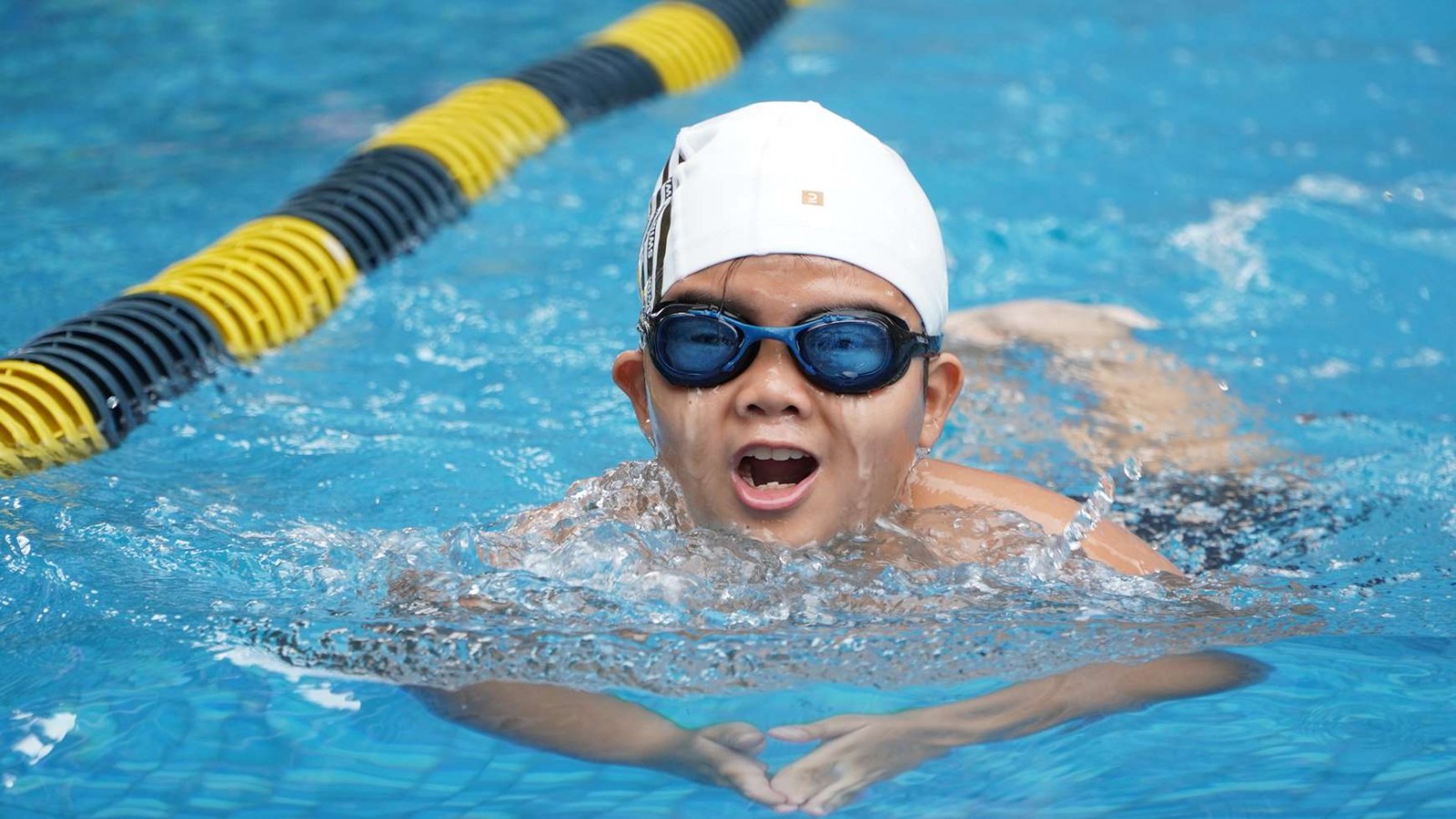
Learning to swim can feel intimidating for beginners, especially those who may not have learned as a child. This is entirely understandable, but people can (and do) learn to swim at all ages and stages of life.
Whether you're an adult who's new to swimming or are returning to the water after some time away, we're here to assist. This simple guide can help you feel more confident and prepared as you start building foundational swimming skills and become more comfortable in the water.
Read on for the most important swimming basics to learn first, common challenges when starting out, and practical swimming tips for beginners.
How Do Beginners Get Comfortable in the Water?
Water comfort is a big part of learning how to swim—and sometimes, a substantial hurdle for those just starting out. Beginners can become comfortable in the water by taking it slow and practicing getting their face and head wet—and maybe a little water in their ears.
Starting in shallow water is usually recommended. When learning the basics and practicing different strokes, people often begin in chest-deep water, so their feet can touch the bottom if they become uneasy or need a break.
This may go without saying, but learning in a swimming pool (specifically, an indoor pool) can reduce external variables and distractions, like weather, noise, and depth visibility. Also, practicing regularly—at least once a week—can help new swimmers feel more at ease each time they get in the water.
What Are the Most Important Swimming Basics to Learn First?
Beyond water comfort, the core beginner concepts of swimming include water safety, breathing control, body position, basic movement, floating, and treading water. Let's explore each in detail.
1) Water Safety
Water safety basics include knowing how to get in and out of the pool, like where to climb out, which areas are deep enough to jump in without hitting the bottom, and how to get out if there's no ladder or steps nearby.
Beginners should also learn how to signal a need for help from a lifeguard. This includes waving one or both arms overhead and shouting "Help!"
2) Breathing Control
Breathing basics for beginner swimmers include practicing holding your breath, starting with just 10 seconds and adding a little more time with practice.
After these fundamentals, swimming lessons teach rhythmic breathing techniques, such as inhaling when your head is above water and exhaling through your nose when underwater.
3) Body Position
New swimmers also need to learn how to position their bodies in the water when performing various strokes, propelling themselves forward, or treading water.
When swimming, you generally want to be semi-horizontal with a neutral spine so that there's a straight line from head to toe. This is known as a "streamlined" position, and it creates the least resistance against water.
4) Basic Movement
Beginners usually learn basic swimming strokes first. This includes the breaststroke, a facedown movement that combines a frog kick (or whip kick) with reach-and-pull arm motions to propel yourself forward.
The backstroke is also beginner-friendly. This face-up swimming style involves alternating backward arm swings and a flutter kick with your legs to propel yourself backward.
5) Floating and Treading Water
Just as important as learning to move your body in one direction through the water is knowing how to float and tread water. These are crucial for water safety, as they allow you to stay in one place with your head above water while conserving energy.
Common Beginner Challenges for Swimmers
A fear of water, difficulty breathing rhythmically, and uncertainty around technique are common challenges for beginner swimmers. But with the right approach and the patience to learn, you can overcome these barriers and swim confidently.
Fear of Water
In most cases, the best way to overcome a fear of water is to slowly get used to being submerged in water in a safe, calm environment, such as in a pool with an instructor. You can start in shallow water, where you can touch the bottom, practicing getting your face wet and gradually increasing your exposure.
Learning the safety basics can also help people overcome their fears and feel more comfortable in water.
Difficulty Breathing Rhythmically
Some people practice breathing techniques out of the water first. This can help beginners get used to the rhythms and learn how and when to inhale and exhale.
Uncertainty Around Technique
Swimming lessons, whether in a group or with one-on-one sessions, are great for learning techniques. The instructor can explain and demonstrate the correct form, watch your movements, and help you adjust until you get it right.
And, as with any skill in life, it takes practice.
Overcoming Common Barriers
Those who had scary or otherwise negative experiences in water as a child or who never learned to swim might feel apprehensive about getting in the water. But no matter your background, you can overcome these barriers by taking it slow, practicing, and learning the basics, step by step.
Swimming Tips for Beginners
If you're a beginner swimmer, follow these tips to feel safer and more confident in the water:
- Start in shallow water – Again, starting in shallow water helps you get used to being submerged while you learn basic motions and breathing techniques.
- Practice controlled breathing – Start by practicing your breathing out of the water until you get used to the rhythms. Then try it when you're in the water.
- Use floating support if needed – Kickboards and other floating devices can be helpful when practicing different kicks and while getting used to swimming in deeper pool areas.
- Take your time – Learning to swim takes time and consistency.
- Practice regularly – Getting in the water regularly—at least once a week—can help you make progress and become more confident.
Beginner Swim Lessons at The St. James
The St. James Aquatic Center is a state-of-the-art swimming facility with an Olympic-sized indoor pool. We offer world-class coaching in a safe, supportive environment for people of all ages, abilities, and backgrounds.
This includes kids' swim lessons, along with adult and youth private swim lessons. Whether you're a first-time swimmer, haven't been in the water for a while, or are looking to improve your skills, we have programs to fit your needs and goals.
Sources:
Lifestyle Medicine. Mood and well-being of novice open water swimmers and controls during an introductory outdoor swimming programme: A feasibility study. https://onlinelibrary.wiley.com/doi/10.1002/lim2.12
National Geographic. Swimming just might be the best exercise out there. Here's why. https://enews.wvu.edu/files/d/7bc14855-1acc-489e-ab70-b3fda8bda2f1/swimming-just-might-be-the-best-exercise-out-there-here-s-why.pdf
American Red Cross Advisory Council on First Aid, Aquatics, Safety, and Prevention (ACFASP). Minimum Age for Swimming Lessons.