


What Your Body Needs for Post Leg-Day Recovery
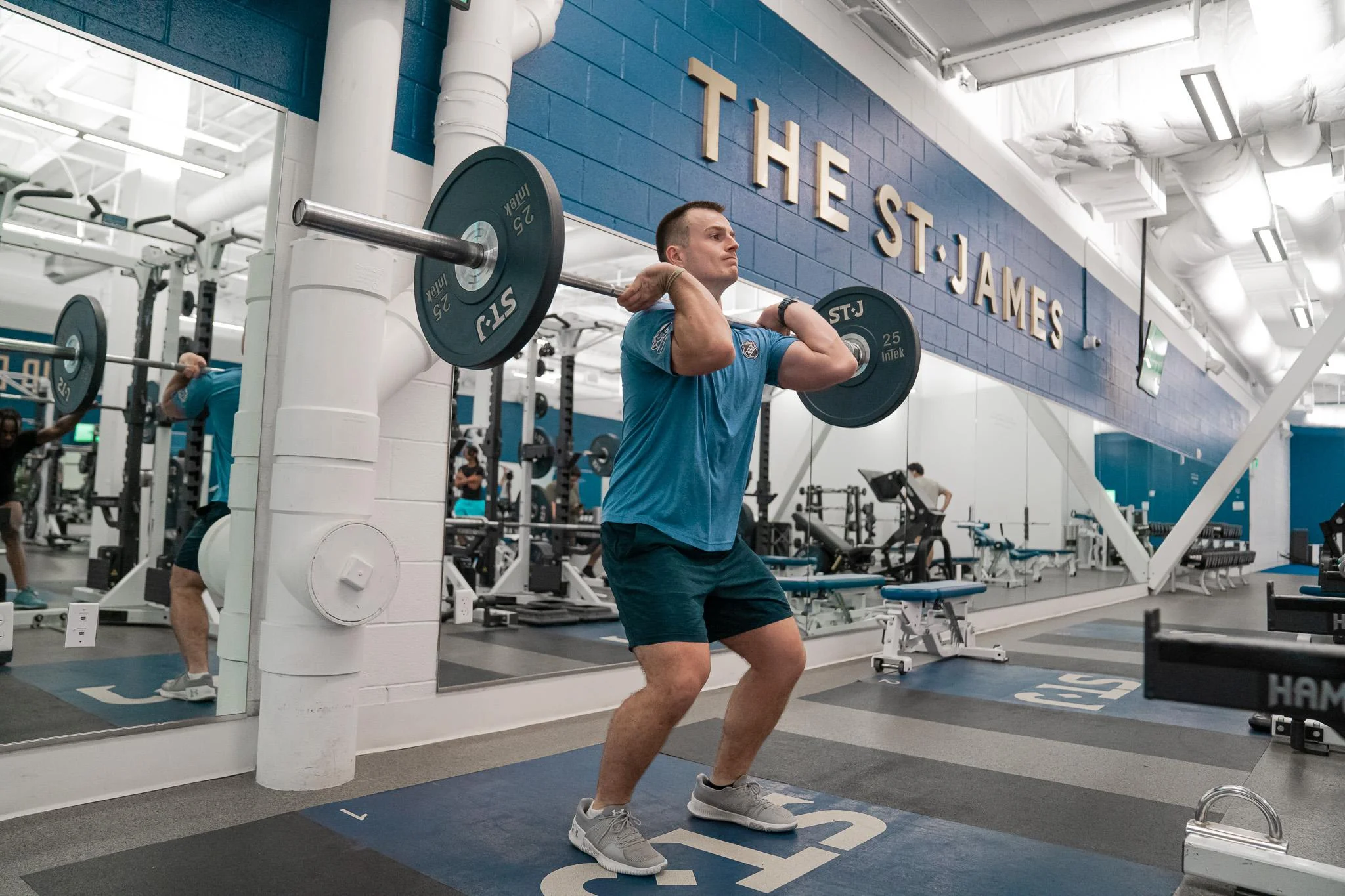
Leg day places significant demand on the body.
Heavy lower-body training challenges your muscles, depletes energy stores, and creates the stress required for adaptation. What happens in the hours that follow plays a major role in how effectively your body recovers, and how prepared it is for the next session.
At The St. James Performance Club, recovery is built into the training process. Through our Build, Burn, Recover framework, recovery is approached with the same intention as every workout.
Here’s what your body needs after leg day.
Refuel
Lower-body training significantly depletes glycogen, the stored carbohydrate your body relies on for energy during exercise.
Replenishing those stores after training helps restore energy levels and supports recovery.
Prioritize:
- Carbohydrates to restore energy
- Protein to support muscle repair
- Hydration and electrolytes to replace what’s lost through training
Recovery starts with giving your body the resources it needs to rebuild.
Restore
Training creates stress. Recovery is where adaptation happens.
Supporting circulation, reducing muscular tension, and promoting tissue recovery can help improve readiness for your next session.
Recovery modalities that support this process include:
- Normatec Compression
- Helps support circulation and reduce post-training heaviness.
- Infrared Sauna
- Promotes circulation and muscular relaxation.
- Red Light Therapy
- Supports cellular recovery processes and tissue repair.
These tools don’t replace recovery fundamentals; they help support them.
Reset
Recovery also requires time.
Following demanding lower-body training, your body often needs 48–72 hours to fully adapt depending on intensity, training volume, and overall recovery habits.
That’s where intentional recovery matters most.
Mobility work, quality sleep, light movement, and strategic recovery sessions help create the conditions for progress.
Recovery at The St. James Performance Club
At The St. James Performance Club, every phase of training matters.
Members have access to recovery modalities designed to support intentional training and long-term progress.
For those looking to take a more complete approach to recovery, become a member to explore these modalities firsthand.
References
- Thomas DT, Erdman KA, Burke LM. Nutrition and Athletic Performance. Medicine & Science in Sports & Exercise. 2016.
- Dupuy O, et al. An Evidence-Based Approach for Choosing Post-exercise Recovery Techniques. Sports Medicine.
- Ihsan M, Watson G, Abbiss CR. Physiological mechanisms of post-exercise cold water immersion. Sports Medicine.
- Bieuzen F, et al. Pneumatic compression and exercise recovery. Journal of Athletic Training.
- Leal-Junior ECP, et al. Photobiomodulation therapy and skeletal muscle recovery. Lasers in Medical Science.
- Laukkanen JA, et al. Cardiovascular and Other Health Benefits of Sauna Bathing. Mayo Clinic Proceedings.