


Got snow? How to avoid injuries during the icy winter months.
By: Andrew Usoro, MD, an orthopedic surgeon at Kaiser Permanente in Largo, Md.
According to groundhog Punxsutawney Phil, we likely have a few more weeks of winter coming our way. That means more potential for snow and ice that many of us are still digging out of from the last storm. It also means more chances for injury from shoveling snow or navigating icy sidewalks and parking lots. But before you grab your shovel or that 20-pound bag of Ice Melt, here is some information to help reduce your risk of injury and keep you steady on your feet.
What’s the proper way to shovel snow?
Shoveling snow combines lifting, twisting, and pushing while working in cold temperatures, which forces your heart and muscles to work harder. Most people use their lower back muscles infrequently, making them more prone to injury. And because this is an activity that often must be done quickly without a proper warm-up, it puts you at risk for muscle strain and other injuries. There are ways to minimize strains:
- Start with a quick warm-up, such as light jogging and stretching (particularly your lower back), if you’re able to.
- Use a small, lightweight shovel to push the show, instead of lifting it. When you need to lift, lift just a little snow at a time.
- Bend your knees rather than your waist when scooping up snow.
- Keep the shovel close to your body and avoid twisting your body when tossing snow to the side.
Also, be sure to take breaks and drink plenty of fluids to stay hydrated. Avoid shoveling after drinking alcohol or eating a heavy meal. And keep your mobile phone with you in the event you start experiencing symptoms like shortness of breath or chest pain, so you can call 911 right away.
How should you care for an injury caused by shoveling snow?
If you do sustain an injury while shoveling snow, these tips can support your recovery:
- Apply ice packs to reduce swelling
- Stretch muscles to restore range of motion
- Use compression sleeves for soreness
- Drink fluids and eat protein to help repair muscles
Call your doctor if your symptoms don’t improve after several days or worsen.
How can you avoid slips and falls on icy surfaces?
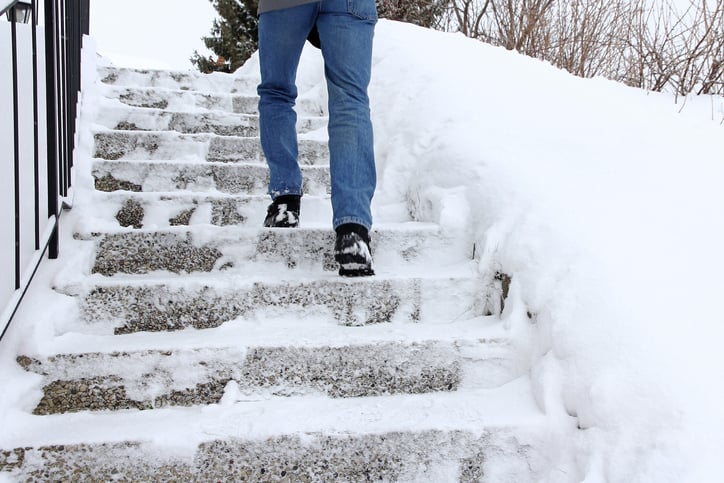
Slips and falls on icy surface areas are common. These accidents can lead to a variety of injuries, such as contusions, bruises, sprains, fractures, concussions, and more. Try to avoid walking on ice by staying indoors, but when unavoidable, there reduce your risk of slipping and falling by:
- Wearing lightweight boots or shoes with treads and good support. You can also put removable snow cleats on your shoes or boots.
- Taking your time and make small steps when walking on ice, and don’t move too fast.
- Walking on the grass or step into the snow when the sidewalks are slippery.
- Using handrails, a cane, or a walking stick when navigating winter weather.
If you do find yourself falling, don’t try to catch yourself with your arms, which may lead to more injuries. Instead, try to land on your bottom or back, which can absorb the impact. If you have your phone, call for help and wait for assistance instead of trying to get back to your feet on your own.
Kaiser Permanente is honored to partner with The St. James to help keep our young athletes healthy and thriving, both on and off the field.
Kaiser Permanente’s sports medicine program offers high-quality care from a multidisciplinary team including orthopedists, podiatrists, physician medicine and rehabilitation specialists, and adult and family medicine doctors with expertise in sports medicine. Everyone works together to help athletes overcome sports injuries so you can return to the activities they love. Learn more about Kaiser Permanente’s sports medicine program.